The content on this page is from our 2026 event. Join the Certainty waitlist to be the first to know when our 2027 program is live.
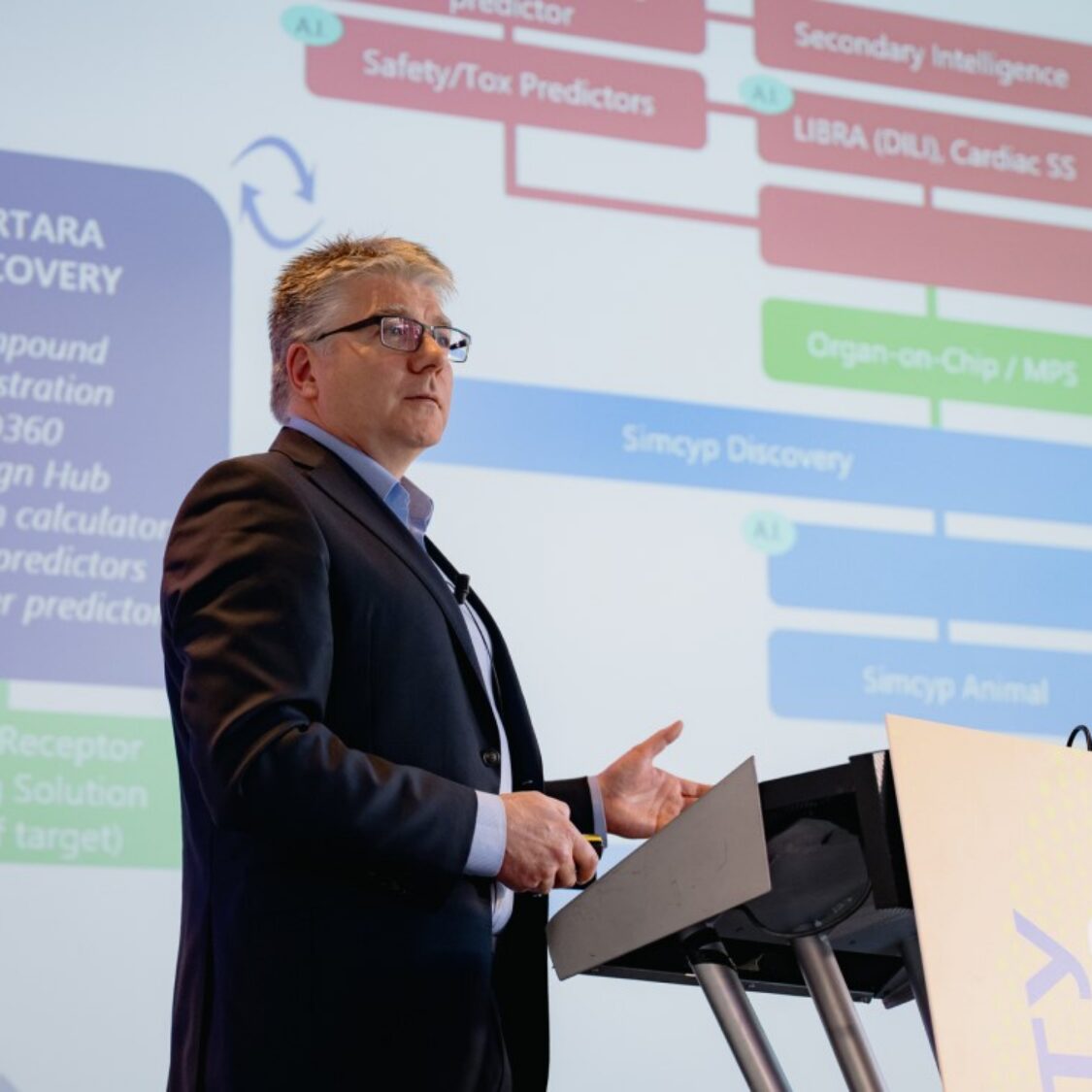
On Tuesday, April 14, get an exclusive look at where Pinnacle 21 Enterprise is headed as we shift from point-in-time checks to continuous confidence across the clinical data lifecycle. Explore current and upcoming enhancements to improve governance, validation efficiency, and reduce rework. The afternoon includes a presentation from AstraZeneca, a regulatory-oriented update tying changing expectations to standards and submission workflows, and rapid-fire roundtables to share tactics for automation, analytics, and readiness.
On Wednesday, April 15, get hands-on training to deepen your Pinnacle 21 mastery and drive earlier data quality and readiness. Hear from your peers with customer presentations on real-world outcomes. The afternoon is interactive, with teams working through common clinical data and validation problems, then a “Shark Tank” style review of USDM and protocol-focused solutions. A closing panel discusses continuous submission readiness using metrics and issue tracking to avoid late-stage fire drills.
Tuesday, April 14, 2026
Agenda
7:15 – 8:15
Breakfast & badge pick up
8:15 – 8:25
Sheila Rocchio
Welcome to Certainty 2026
Kick off Certainty 2026 with a look at the state of the industry, an overview of what to expect during the event and the key insights to take back with you.
Speaker: Sheila Rocchio, CMO, Certara
8:25 – 8:50
Amin Rostami, Piet van der Graaf, Mirjam Trame
Evolution of evidence generation with PBPK and QSP champions
Join the leaders spearheading PBPK and QSP science & strategy for an insightful discussion that will explore:
- Critical regulatory shifts and their impact on MIDD
- The evolution of MIDD to MIE (Model-Informed Evidence) and how it’s being used
- Recentering the patient experience by leveraging findings from virtual trials
- How AI can be most effective and where it won’t permeate scientific processes
Speakers:
Amin Rostami, PhD, FCP, FAAPS, FJSSX, FBPS, Senior Vice President of R&D and Chief Scientific Officer (CSO), Certara
Piet van der Graaf, PharmD, PhD, Senior Vice President, Quantitative Systems Pharmacology, Certara
8:50 – 9:15
Matt Rizk, Leif Pedersen
Fireside chat: Moving from models to decisions earlier
This insightful conversation will showcase Merck’s approach to integrating Certara solutions & scientific expertise to improve decision-making at every phase of drug development. The discussion will also examine how AI is solving fragmented workflows and how this leads to exponential growth in productivity.
Speakers:
Matt Rizk, PhD, Associate Vice President, Translational Sciences & Outsourcing Department of Pharmacokinetics, Dynamics, Metabolism, and Bioanalytics, Merck
Leif Pedersen, President, Chief Commercial Officer, Certara
9:15 – 9:35
Josh Apgar
Achieving faster time to insights with AI
It’s clear that AI used in tandem with sophisticated modeling is shifting the drug development timeline, from generating insights to making confident decisions at a rapid pace.
This presentation will demonstrate how:
- Real power comes from combining AI regulatory-grade modeling software AND scientists: not replacing everything that exists
- Certara is incorporating AI to support decision-making as a core tech provider, and by empowering scientists-in-the-loop
- The future is more connected as AI architectures bring data, models, and expertise together for achieve quality decisions faster.
Speaker:
Joshua Apgar, PhD, VP, Head of QSP Software, Certara
9:35 – 9:55
Amin Rostami, Piet van der Graaf, Matt Rizk, Chris Bouton,Leif Pedersen
Panel Discussion: From vision to action
This panel will examine the challenges being faced by our industry today, and how to operationalize innovative technology & science for faster, better decision-making. Panelists will share where they expect strategy and processes to evolve in the next year.
Panelists:
Amin Rostami, PhD, FCP, FAAPS, FJSSX, FBPS, Senior Vice President of R&D and Chief Scientific Officer (CSO), Certara
Piet van der Graaf, PharmD, PhD, Senior Vice President, Quantitative Systems Pharmacology, Certara
Matt Rizk, PhD, Associate Vice President, Translational Sciences & Outsourcing Department of Pharmacokinetics, Dynamics, Metabolism, and Bioanalytics, Merck
Chris Bouton, PhD, Chief Technology Officer, Certara
Leif Pedersen, President, Chief Commercial Officer, Certara
10:00 – 10:30
Morning break - demo bar
10:30 – 11:00
Erin Erginer
Roadmap & vision: Advancing certainty across the clinical data lifecycle
As organizations mature in their use of Pinnacle 21 Enterprise, expectations shift from point-in-time validation to continuous confidence across the clinical data lifecycle. This session outlines the product vision guiding the next evolution of Pinnacle 21 Enterprise, and how it supports Certara’s commitment to Certainty Right from the Start.
Erin Erginer, Senior Director of Product, will share how customer insights, emerging regulatory expectations, and real-world workflow challenges are shaping the Pinnacle 21 Enterprise roadmap. The discussion will focus on advancing automation, improving cross-functional visibility, and enabling earlier, more connected decision-making, from study design through submission and beyond.
Topics will include:
- How Pinnacle 21 Enterprise is evolving to support earlier validation and proactive data quality
- Expanding capabilities for metadata-driven workflows, standards governance, and traceability
- Enhancements that improve collaboration across data management, programming, and biostatistics
- Scaling from study-level execution to portfolio-level insight and readiness
- How customer feedback from P21 Live directly influences product direction
This session is designed for experienced Pinnacle 21 users who want to understand not just what’s coming next, but why and how future capabilities align with the practical realities of modern clinical development.
Presenter: Erin Erginer, Senior Director of Product
11:00 – 11:45
Matt Meyers, Trevor Mankus, Amy Garrett, Fred Hurley
What’s new in Pinnacle 21 Enterprise: Features, enhancements, and what’s next
Pinnacle 21 Enterprise continues to evolve in response to how teams are using the platform in real-world clinical data workflows. In this session, members of the Pinnacle 21 Enterprise product management team will walk through key features and enhancements released since the last P21 Live, highlighting how these updates support earlier validation, stronger governance, and more efficient collaboration across functions.
Designed for experienced users, this session goes beyond a feature list to explore how recent capabilities can be applied in practice, helping teams streamline validation workflows, improve visibility across studies and portfolios, and reduce downstream rework. Product leaders will also offer a sneak peek at functionality currently in development, including eCRF Creator, and discuss how these capabilities fit into a broader vision of building certainty from the very start of the clinical data lifecycle.
Topics will include:
- Notable enhancements introduced over the past year and how they address common user challenges
- Practical use cases for applying new functionality within existing P21 Enterprise workflows
- How recent updates support standards management, data management, programming, and biostatistics teams
- An early look at features in progress, including eCRF Creator, and their role in upstream data quality
This session is ideal for Pinnacle 21 users who want to stay current on platform capabilities, explore advanced functionality, and understand how new features can be leveraged to strengthen confidence across the clinical data pipeline.
Presenters: Matt Meyers, Trevor Mankus, Amy Garrett, Fred Hurley
11:45 – 12:30
Fred Bermont, Erica Gonzales
Ensuring clinical data quality at collection: Advancing data acquisition standards and governance using ryze
High-quality, compliant clinical data is the foundation of efficient trial execution, regulatory readiness, and reliable downstream analytics. This session will explore how AstraZeneca has strengthened this foundation by implementing ryze as a centralized platform for advancing clinical data acquisition standards, governance, and compliance across its portfolio.
The presentation will demonstrate how ryze enables the authoring, management, and governance of clinical data acquisition standards, aligning study design with EDC collection standards and global regulatory expectations. Attendees will learn how teams leverage the platform to search historical studies, reuse proven designs, and visualize proposed standards for cross-functional review—enhancing transparency, consistency, and efficiency in standards development and approval.
The session will also highlight how approved standards are deployed at the study level to reduce start-up timelines, supported by controlled waiver processes and comparison reporting to manage and communicate deviations. This governance approach promotes high levels of standards compliance while minimizing downstream rework, risk, and cost.
Looking ahead, the presentation will cover AstraZeneca’s forward-looking strategy, including embedding business rules directly into metadata, standardizing external data collection, and leveraging AI, machine learning, and large language models to enhance automation, adaptability, and data quality. Emerging innovations such as a Standards GPT assistant and the application of the Unified Study Definitions Model (USDM) to automate CRF generation will also be discussed.
Overall, this session will demonstrate how a well-governed data acquisition platform can drive efficiency, compliance, and innovation across the clinical data lifecycle.
Presenters:
Fred Bermont, Senior Director, Clinical Data Standards at Moderna
Erica Gonzales, Associate Director, Clinical Data Standards at Moderna
12:30 – 1:00
Prathima Surabhi
Change management challenges for clinical data standards teams and how to face them
This presentation explores the evolving challenges faced by Clinical Data Standards teams amid increasing regulatory demands, technological advancements, and organizational change. Prathima Surabhi from AstraZeneca highlights key pain points such as maintaining data consistency, adapting to new standards, and supporting cross-functional collaboration. The session also outlines strategic approaches to address these challenges, including enhanced governance, scalable processes, and the adoption of innovative tools to ensure efficiency, compliance, and future readiness.
Presenter: Prathima Surabhi, Director, Standards Development at AstraZeneca
1:00 – 2:00
Lunch & demos
2:00 – 2:30
Michael Beers, Kristin Kelly
Regulatory update: What’s changing—and what it means for your P21 workflows
Regulatory expectations for clinical data quality, standards, and submissions continue to evolve, often with direct implications for how teams design studies, manage standards, and validate data throughout the lifecycle. In this session, regulatory and standards experts from Certara and Pinnacle 21 will provide an update on recent and emerging regulatory guidance, with a focus on what experienced Pinnacle 21 users need to know now.
Rather than a high-level overview, this discussion will connect regulatory developments to practical workflow considerations, including how teams can interpret guidance consistently, anticipate downstream impact, and build regulatory confidence earlier in the process. The presenters will also highlight where Pinnacle 21 Enterprise helps operationalize regulatory expectations, supporting clearer decision-making, stronger traceability, and more predictable submission outcomes.
Topics will include:
- Recent updates and trends in global regulatory expectations related to data standards and validation
- Practical implications for SDTM, ADaM, and submission workflows
- Common areas of regulatory focus that create late-stage risk
- How early alignment and continuous validation support regulatory confidence
- What teams should be watching next and how to prepare
This session is designed for clinical programmers, biostatisticians, standards leaders, and data management professionals who want to stay ahead of regulatory change and ensure their workflows continue to support certainty right from the start.
Presenter: Michael Beers, Kristin Kelly
2:30 – 3:30
Julie Ann Hood, Trevor Mankus, Amy Garrett, Michael Beers
Speed conversations: Peer insights from across the P21 community
This fast-paced, speed-dating style roundtable session is designed to spark meaningful peer-to-peer conversations across the Pinnacle 21 community. In a series of short, facilitated discussions, participants will rotate between tables focused on key challenges and opportunities in today’s clinical data and validation workflows.
Each roundtable centers on a single question related to automation, standards, analytics, and submission readiness, encouraging participants to share what’s working, what’s not, and what they would do differently if they were starting again. The format emphasizes conversation over presentation, creating space for honest dialogue, cross-functional perspectives, and practical takeaways.
Insights captured during the session will be synthesized and shared during the event wrap-up, highlighting common themes and emerging priorities from across the P21 user community.
This session is ideal for attendees who want to learn from peers, exchange ideas quickly, and explore how others are building certainty right from the start.
Discussion group moderators: Julie Ann Hood, Trevor Mankus, Amy Garrett, Michael Beers
3:30 – 4:00
Afternoon break
4:00 – 5:00
David Fajgenbaum, MD
Keynote presentation
5:00 – 5:15
Close of day
Wednesday, April 15, 2026
7:30 – 8:30
Breakfast & badge pick up
8:30 – 9:00
Sean McGee
From protocol to submission: an optimized digital workflow
Like a decathalon, a clinical study is a series of challenges. Selecting the right endpoints. Drafting a protocol. Setting up data collection. All this needs to happen before the first patient visit. From there, it’s wave after wave of data validation and analysis, reporting and table-creation, and the million-and-one checkpoints of submission.
How much time, cost, and pain might be saved by relying on a suite of interconnected solutions, each purpose-built for its task? Find out in this fast-paced demonstration of Certara capability from protocol to submission. In 30 minutes, you’ll see how our increasingly AI-driven technology supports your organization right from start, when a study is little more than a justified hope. Sean McGee will present solutions for endpoint selection, optimal trial design, data standardization, analysis, reporting, and more. Live 5-plus years of the trial life in a half-hour, all with Certara by your side.
Presenter: Sean McGee, MS, Director of Product, Certara
9:00 – 10:30
Julie Ann Hood, Trevor Mankus, Amy Garrett
Hands-on training: Practical skills for building certainty with Pinnacle 21 Enterprise
Regulatory expectations for clinical data quality, standards, and submissions continue to evolve, often with direct implications for how teams design studies, manage standards, and validate data throughout the lifecycle. In this session, regulatory and standards experts from Certara and Pinnacle 21 will provide an update on recent and emerging regulatory guidance, with a focus on what experienced Pinnacle 21 users need to know now.
Rather than a high-level overview, this discussion will connect regulatory developments to practical workflow considerations, including how teams can interpret guidance consistently, anticipate downstream impact, and build regulatory confidence earlier in the process. The presenters will also highlight where Pinnacle 21 Enterprise helps operationalize regulatory expectations, supporting clearer decision-making, stronger traceability, and more predictable submission outcomes.
Topics will include:
- Recent updates and trends in global regulatory expectations related to data standards and validation
- Practical implications for SDTM, ADaM, and submission workflows
- Common areas of regulatory focus that create late-stage risk
- How early alignment and continuous validation support regulatory confidence
- What teams should be watching next and how to prepare
This session is designed for clinical programmers, biostatisticians, standards leaders, and data management professionals who want to stay ahead of regulatory change and ensure their workflows continue to support certainty right from the start.
Presenters: Julie Ann Hood, Trevor Mankus, Amy Garrett
10:30 – 11:00
Morning break
11:00 – 11:45
Majdoub Haloui, Srinivas Malipeddi
Pinnacle21 Enterprise end-to-dnd: Navigating compliance, quality, and global standards for FDA, PMDA and NMPA
Regulatory submission readiness requires an integrated, enterprise‑level approach to clinical data validation and governance. This presentation demonstrates how Pinnacle 21 Enterprise supports end‑to‑end submission readiness by centralizing SDTM and ADaM validation, metadata generation, issue triaging, and reviewer documentation within a single platform. A standardized data package request and access management process enables controlled handling of blinded and unblinded data, thereby reducing the risk of inadvertent unblinding.
The session also highlights an integrated validation and issue‑triaging workflow that improves traceability, data quality, and collaboration. Finally, the ‘Mirror Concept’ is introduced, illustrating alignment between sponsor and regulatory reviewer perspectives to support efficient global submissions to the FDA, PMDA, and NMPA.
Presenters:
Majdoub Haloui, Senior Principal Scientist, Manager, Statistical Programming at Merck
Srinivas Malipeddi, Principal Scientist, Statistical Programming at Merck
11:45 – 12:30
Shereen Khwajazada
Cracking the code on NCA: Using Pinnacle 21 to de‑risk PK analyses across statistical programming and biometrics project management with a dose of adaptability
Non‑compartmental analysis (NCA) blends scientific nuance with operational complexity, which is exactly where Pinnacle 21 (P21) can either amplify risk or unlock speed. Despite the programmatic and project management challenges, this presentation concentrates on a proactive approach to analyzing workable solutions with a dose of adaptability from all stakeholders.
This session shares practical lessons from the Statistical Programmer and a Biometrics Project Manager lens on building robust ADPC/ADNCA datasets, aligning Define.xml metadata, and using P21 validation as an early‑warning system rather than a late submission barrier.
Shereen will cover recurring NCA challenges: missing and BLQ concentrations, exclusion rules, baseline definition, actual versus planned timepoints, outliers, subject‑level plots, and descriptive summaries, then show how these choices surface as P21 conformance findings or metadata gaps. She will present patterns for ADNCA specifications (co‑authored with PK scientists), value‑level metadata for parameters (e.g., AUC, CMAX, TMAX, LAMBDAZ), and traceability that reduce P21 warnings and errors.
From an operational lens, Shereen will demonstrate how communication plans, review‑cycle design, and clear DTAs for raw concentration data prevent downstream rework to protect timelines and budgets. Attendees will leave with a lightweight P21‑centered workflow from first derivation to final submission that shortens validation cycles and improves submission readiness.
Presenter: Shereen Khwajazada, Director of Biometrics at Summit Analytical, PHUSE Americas Director
12:30 – 1:30
Lunch
1:30 – 2:30
Bryan Farrow, Julie Ann Hood, Trevor Mankus, Amy Garrett, Erin Erginer
Data challenges: Solving real-world problems together
This hands-on, discussion-driven session invites participants to tackle realistic clinical data and validation challenges drawn from everyday Pinnacle 21 Enterprise workflows. Working in small, cross-functional groups, attendees will examine common data issues, such as inconsistent SDTM variables, validation conflicts, or metadata mismatches, and collaborate to identify root causes, potential fixes, and opportunities for earlier prevention.
The focus of this activity is not on coding or tools, but on how teams think through data problems. Participants will discuss what went wrong, where the issue originated in the data lifecycle, and how improved processes, governance, or automation could have created certainty earlier.
After each challenge, groups will reconvene to share their solution paths, compare approaches, and reflect on common themes. Facilitators will then connect these insights to how Pinnacle 21 Enterprise can support earlier validation, better traceability, and more consistent workflows.
This session is ideal for clinical programmers, biostatisticians, data management professionals, and standards leaders who want to learn from peers, sharpen problem-solving skills, and explore how collaboration and automation can turn data issues into opportunities for improvement.
Moderator: Bryan Farrow
Roving helpers: Julie Ann Hood, Trevor Mankus, Amy Garrett, Erin Erginer
2:30 – 3:00
Bhargav Koduru
From schedule of activities to SDTM: Automating data standards with USDM and BCs
As we continue to enable AI in clinical trial execution, there is an increasing need to adopt a structured, semantically rich data format right at the top of the clinical trials data pyramid: the protocol. The ICH M11 Clinical Electronic Structured Harmonized Protocol Template provides a comprehensive framework for clinical protocols, with standardized content that includes both required and optional components.
This session will explore how emerging standards, such as the Unified Study Definitions Model (USDM) and Biomedical Concepts (BCs), are enabling a semantic-rich, metadata-driven approach to clinical trial design and execution. By digitizing protocols and formalizing activity schedules, organizations can reduce inefficiencies, avoid costly amendments, and accelerate study timelines.
The presentation will demonstrate how USDM provides a standardized framework for representing protocol elements, while BCs offer reusable and consistent definitions of clinical data across studies. Attendees will learn how these concepts are applied, from protocol design to Case Report Form (CRF) creation and into Study Data Tabulation Model (SDTM) datasets, thereby ensuring a seamless flow of structured data.
This approach not only enhances standardization and reusability but also introduces “guardrails” that maintain consistency and quality during data transformation and downstream processes.
Overall, this end-to-end vision illustrates how standards-driven automation is essential for achieving more efficient, scalable, and future-ready clinical trial operations.
Presenter: Bhargav Koduru, Senior Manager, Statistical Programming at Medidata
3:00 – 3:45
Christine Galanti, Mitchell Brahin, Christine Rossin, Manikandan Bakthavatsalam
Panel discussion: Submission readiness without the panic
For many experienced P21 users, the goal has shifted from passing validation at submission time to achieving continuous submission readiness throughout the study lifecycle. This panel explores how teams are redefining submission preparedness, and how early decisions in standards, metadata, and validation workflows can dramatically reduce last-minute stress.
Panelists will share how they use Pinnacle 21 Enterprise beyond final checks, leveraging advanced capabilities such as study- and portfolio-level metrics, trend analysis, and centralized issue tracking to assess readiness long before the finish line. The discussion will also highlight the evolving role of standards management and data management teams in creating the foundation for confident, predictable submissions. Attendees will gain insight into:
Identifying early indicators of submission risk
Using validation metrics to support proactive decision-making
Aligning programming, biostatistics, and data management around shared readiness goals
Moving from reactive fire drills to continuous confidence
This panel is designed for teams ready to transform submission readiness from a stressful milestone into a steady, manageable process, built on certainty from the start.
Moderator: Christine Galanti, Senior Customer Success Manager
Panelists:
Mitchell Brahin, Director, R&D IT Development & Late TA, IT Product Management Clinical Standards at AstraZeneca
Christine Rossin, Senior Director of Electronic Submissions in Statistical Data Sciences and Analytics at Pfizer
Manikandan Bakthavatsalam, Founder, StatGPT LLC, Former Director of Statistical Programming, Sarepta, Former Programming Manager, PPD
3:45 – 4:00
Close of day
Join the Certainty 2027 waitlist